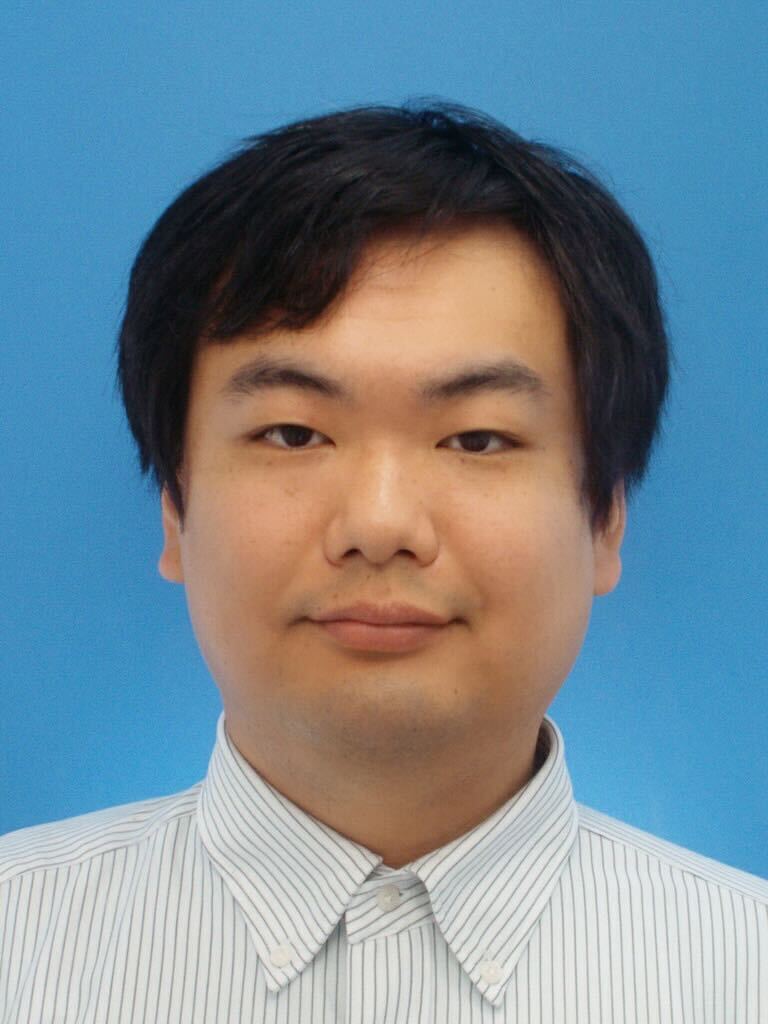
Career Profile
I am Rin Yamada, a project Assistant Professor at Nobeyama Radio Observatory, which is a branch of National Astronomical Observatory of Japan. I am specialized in star formation, ISM evolution, and local group galaxies as well as controlling software development for radio telescopes. I have completed my Ph.D. in Nagoya University, under the co-supervision of Prof. Fukui and Prof. Tachihara.
Present position
I am in charge of Commissioning and Science Operation manager and Science Verification (CSV) manager of NRO, and a member of Computing, and Public Outreach teams. In addition to these roles, my main works are,
- To conduct high-impact scientific research using the Nobeyama 45-m radio telescope.
- To promote the Nobeyama 45-m radio telescope both domestically and internationally and increase the number of its users.
- To take responsibility for one or more of the operational divisions involved in the management of the Nobeyama 45-m radio telescope.
- To actively participate in discussions and planning for Japan’s large-scale future projects in astronomy.
Research history
As a postdoctoral researcher in the ALMA Joint Scientific Research Program, I was dispatched from the National Astronomical Observatory of Japan to Gifu University, where I conducted research on the interaction between supernova remnants and interstellar gas with Associate Professor Hidetoshi Sano.
I have employed in the research of GMC evolution and subsequent high-mass star formation in our Galaxy and nearby Galaxies. Main findings were
- Limit the GMC evolution time scales to ~10 Myr using the cloud classification scheme.
- Confirmed the initial condition of high-mass star formation “0.1 solar mass in 0.1 pc radius” is achieved by the cloud-cloud collisions. These findings were the primary contents of my Ph. D. thesis.
Recent Oral talks in international conference
Recent studies have revealed that colliding flows play a crucial role in the evolution of the interstellar medium (ISM). Kinematic analyses of CO molecular gas using the Nobeyama 45-m telescope and the Arizona Radio Observatory’s Submillimeter Telescope (SMT) toward high-mass star-forming regions in the outer Galaxy—where foreground and background contamination is minimal—have suggested the cloud-cloud collisions in regions such as W3, Sh2-233, and GL 490 (Yamada et al. 2022, 2024, 2025 submitted). Particularly in the Sh2-233 region, the collision of molecular clouds with column densities on the order of 10^22 cm^-2 and a relative velocity of ~3 km/s may produce shock compression conditions that achieve the initial conditions of high-mass star formation as predicted by the classical monolithic collapse model, namely a 0.1 pc radius core with 100 solar masses. This indicates the molecular cloud-cloud collisions as a viable mechanism for achieving the initial conditions for massive star formation, and supported the cloud-cloud collision as a major driver of high-mass star formation (see Fukui et al. 2021 for review). On the other hand, in the GL 490 region, we have identified a potential transition from pure atomic hydrogen gas to molecular gas triggered by the collision between HI gas with a column density of 5×10^20 cm^-2 and CO gas with a column density of 1×10^22 cm^-2 having a relative velocity of 10 km/s (Yamada et al. 2025, submitted). Furthermore, in the IVC75 region, a collision between infalling intermediate-velocity cloud gas with a column density of 1×10^20 cm^-2 and the Galactic disk gas at a relative velocity of 50 km/s ( (Hayakawa & Fukui 2024) may have caused ionization of the HI gas (Yamada et al., in preparation). In this presentation, we will discuss the diverse physical outcomes of these collision events and highlight how they depend on the density of the pre-collision gas and the relative velocity. We will also summarize the emerging picture of colliding flows as a key driver of ISM evolution.
High-velocity clouds (HVCs), characterized by velocities exceeding –100 km/s as they fall toward the Galactic plane, have been suggested to originate from gas accreting from the intergalactic medium. In contrast, intermediate-velocity clouds (IVCs), which have velocities around –50 km/s—between those of HVCs and local gas—have traditionally been interpreted as gas blown out by past events such as supernova explosions and now falling back onto the Galactic disk as part of a galactic fountain cycle (fountain cycle; Shapiro & Field 1976;Bregman 1989). However, Hayakawa & Fukui (2024), based on a comparison of τ₃₅₃ and HI, pointed out that a significant fraction of IVCs consists of low-metallicity gas. They argued that IVCs may be decelerated components of HVCs interacting with halo or local gas, highlighting the growing importance of IVCs in the process of gas accretion onto the Galactic disk. In our study, we found that in the cases of IVC86–36 and IVC 75, Hα emission aligns well with an HI filament falling toward the Galactic plane at a relative velocity of ~50 km/s. The HI filament has a density of approximately 1cm⁻³, suggesting that the gas may be ionized as a result of this high-velocity collision.
Projects
I have employed in the following development projects.
Publications
My recent first authored papers are the following: